How to Get the Blade Runner Look in AI Art: Light Smears, Neon Rain and Orange Haze (Prompts Included)
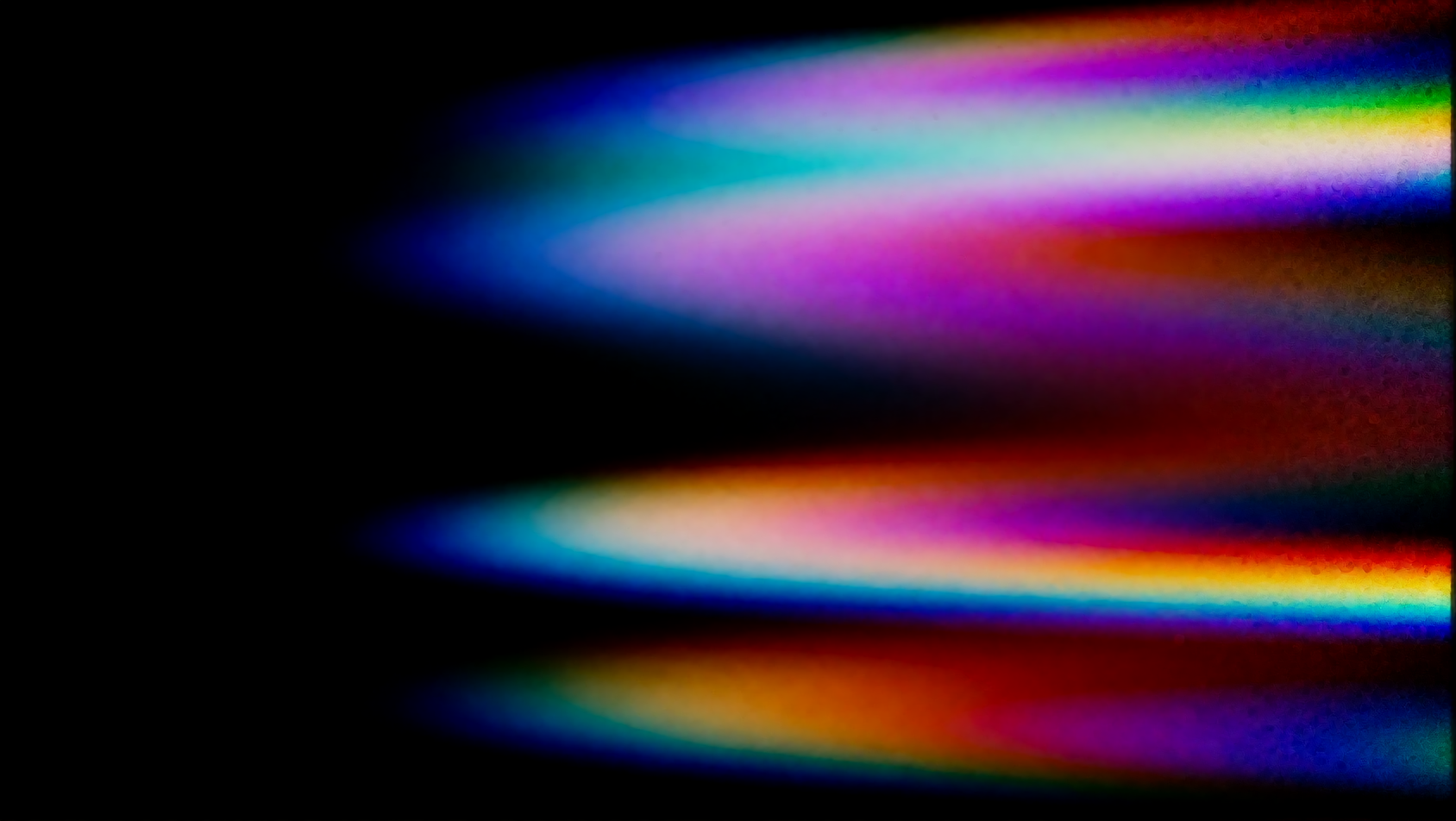
Every image in this guide was made on Mirrorize in 16:9 from the prompt printed under it. Nothing was edited, and every prompt worked on the first try except one, which we'll tell you about.
The opening of Blade Runner 2099 is just colour, black and a couple of names. Blurred bands of light drift across a black screen, burning cyan on one side and orange on the other. The titles were made by Antibody, the studio of Patrick Clair and Raoul Marks, who call it a "chemical iridescent airlock" into the world of the show. Since it aired, people have been asking how to make visuals like that, especially if abstract work isn't their thing.
The good news is that abstract is easier than it looks. You don't need to describe a thing, only how the light behaves. This guide covers the three looks people mean when they say "Blade Runner":
- The light smear: the abstract title-card look
- Neon rain: the city at night
- Orange haze: the dusty, monochrome wasteland
1. The light smear
This is the one everyone's asking about. Here's the prompt that got closest to the real title card:
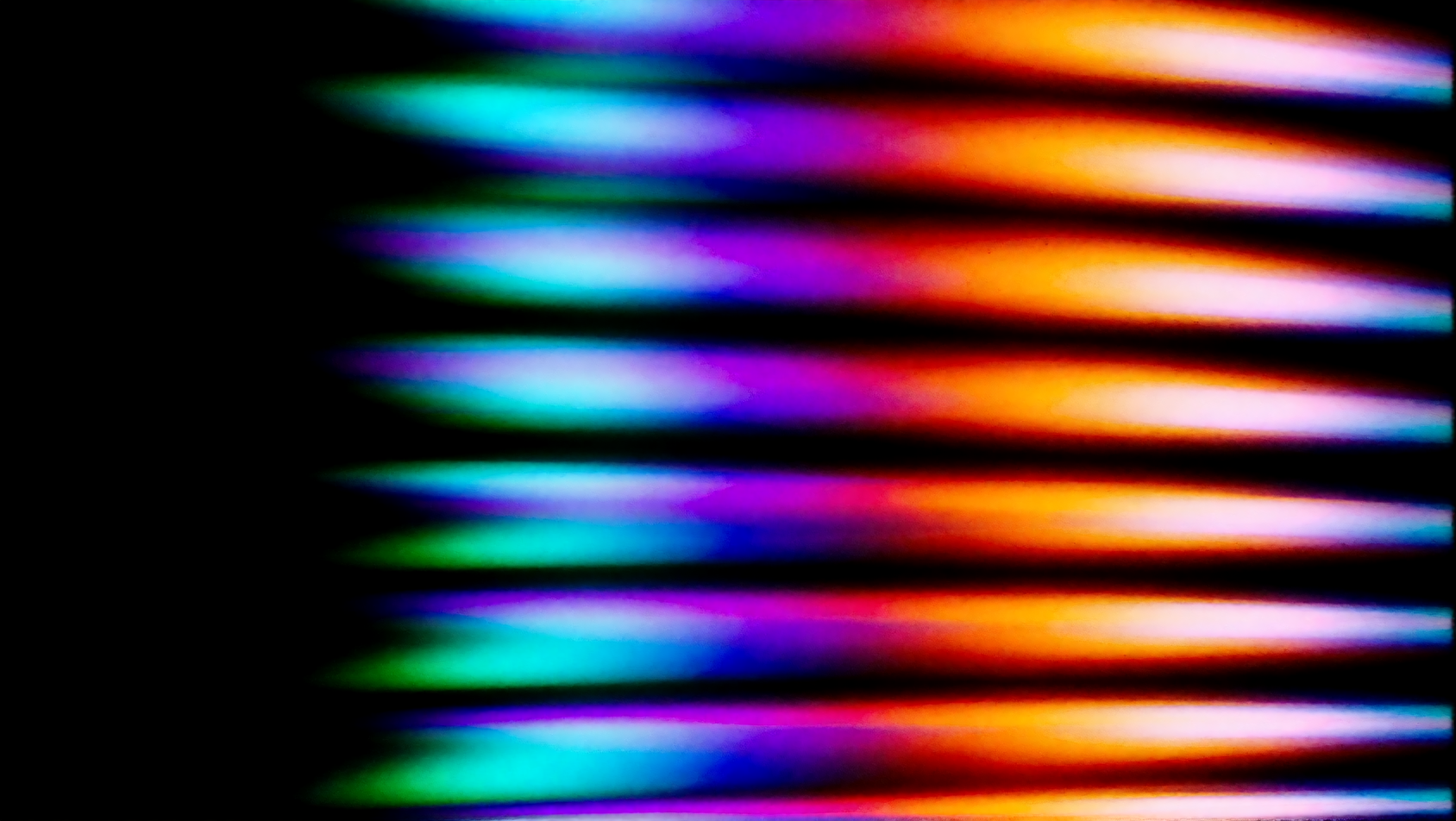
"Dozens of thin horizontal bands of blurred light stacked on top of each other, each band glowing cyan and violet on the left and burning orange and red on the right, smeared like a slit-scan photograph, pure black on the left third of the frame, VHS chroma bleed, fine grain, no text" · Nirvana
Why it works, piece by piece:
- "Thin horizontal bands … stacked" sets the shape. Ask for "streaks" instead and you get a few fat ones, which is still beautiful but softer (see below).
- Colours in order, with a direction. "Cyan and violet on the left … orange and red on the right" gives you a gradient that travels across the frame instead of a random rainbow.
- "Slit-scan photograph" and "VHS chroma bleed" are the texture. Slit-scan is the old film trick of smearing light over time, and chroma bleed gives the colour edges that soft, analog fringe.
- "Pure black on the left third" leaves room. The real title card puts its names in the dark, so plan where your text will go before you make the image.
Fewer, fatter streaks give a dreamier version:
"Abstract main title still: soft horizontal light streaks smeared across a pure black frame, spectral bands bleeding from cyan and violet into magenta, orange and deep red, slit-scan long exposure, chromatic aberration at the edges, fine film grain, minimal, elegant, lots of black negative space on the left" · Nirvana
And here is the same prompt on Polarize. The streaks come out thinner, sharper and more liquid, like light pouring off the edge of the frame:
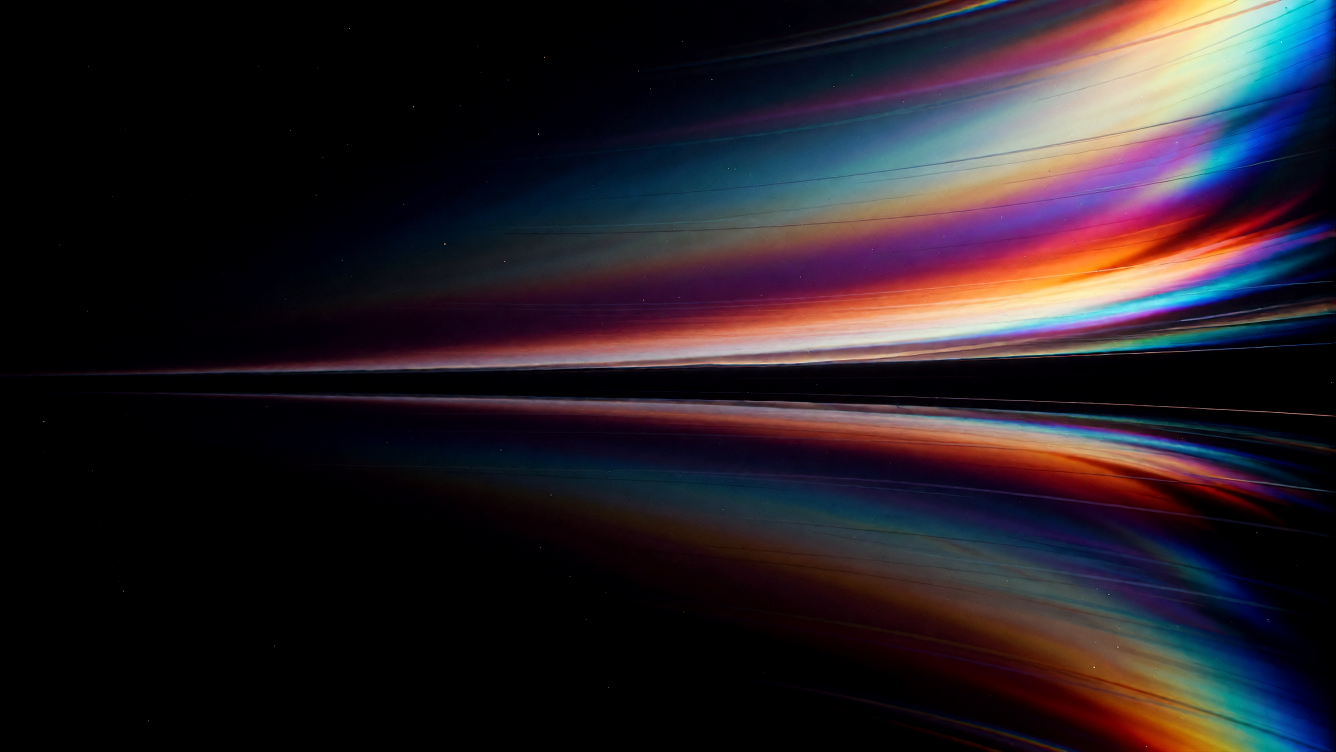
Same prompt as above · Polarize
Put a person in the light
The same language works on a face. Keep the black background and let the colour do the talking:
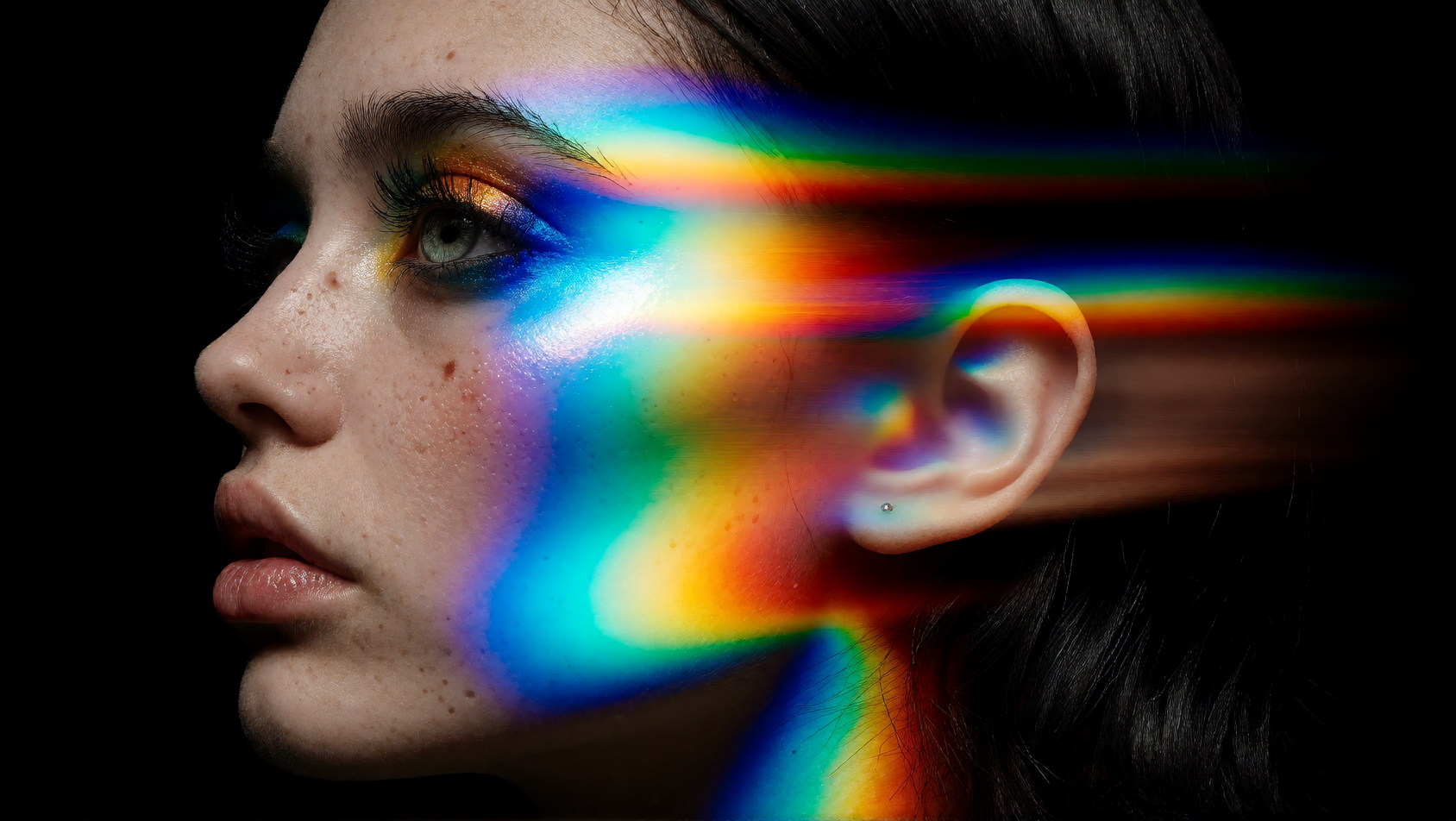
"Side profile of a woman's face dissolving into horizontal streaks of spectral light, cyan to orange gradient, prism refraction, motion smear, pure black background, quiet and melancholic, cinematic, film grain" · Nirvana
Go chemical
Antibody's "chemical iridescent" is literal too: think petrol on a wet road.
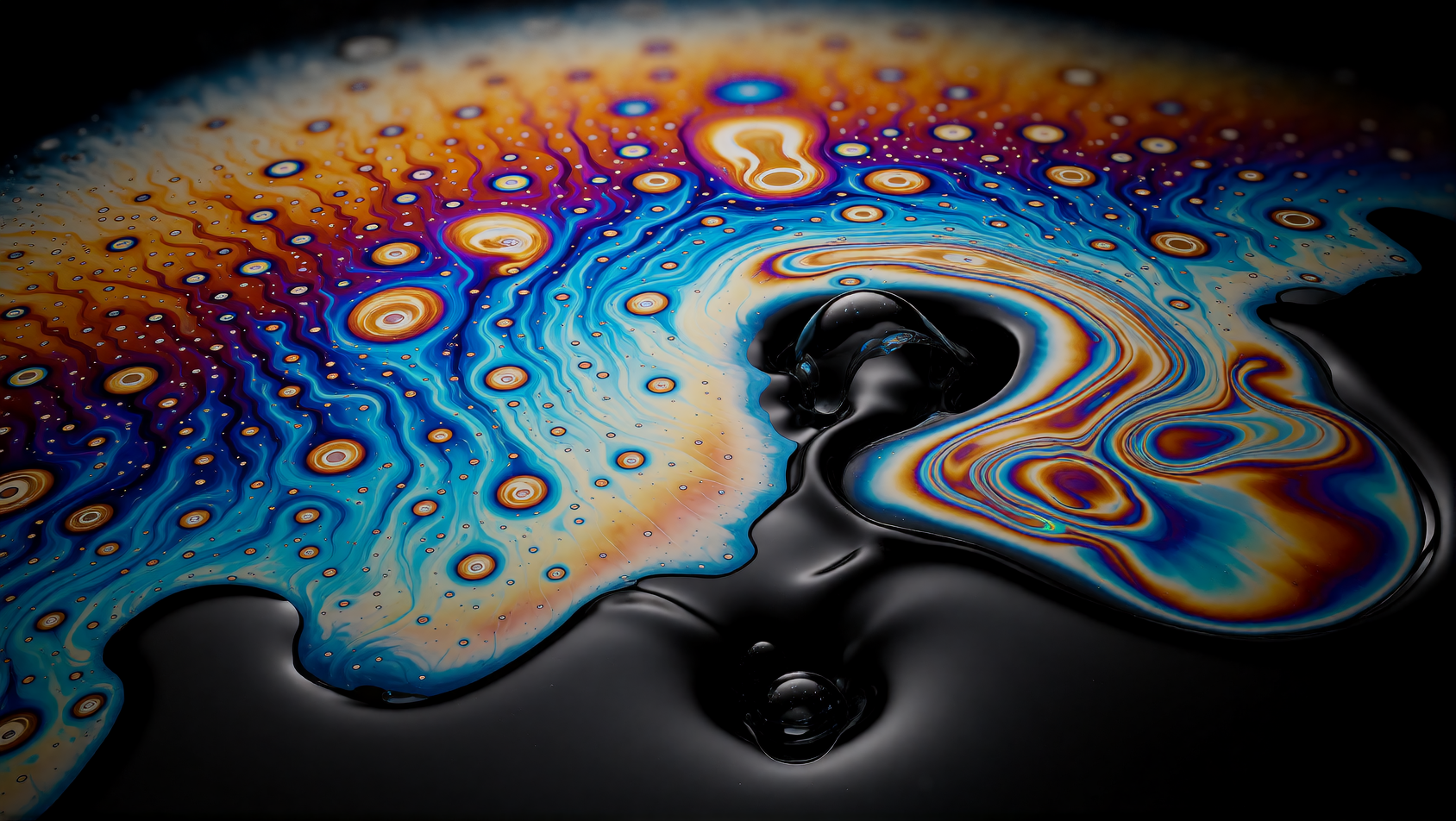
"Macro of an iridescent chemical film dissolving into darkness, thin-film interference rainbow sheen like petrol on wet asphalt, cyan magenta and amber, slow liquid motion blur, cinematic, shallow depth of field, black background, film grain, no text, no lettering" · Nirvana
The one word that ruins it. Our first try at this image said "cinematic main title still", and the model helpfully wrote a fake title across the bottom in made-up letters. Words like title, poster and cover invite lettering. Leave them out, or end the prompt with "no text, no lettering" like we did here.
2. Neon rain
The city at night is the look most people picture: wet streets, haze, neon reflected in puddles, someone alone in a long coat.
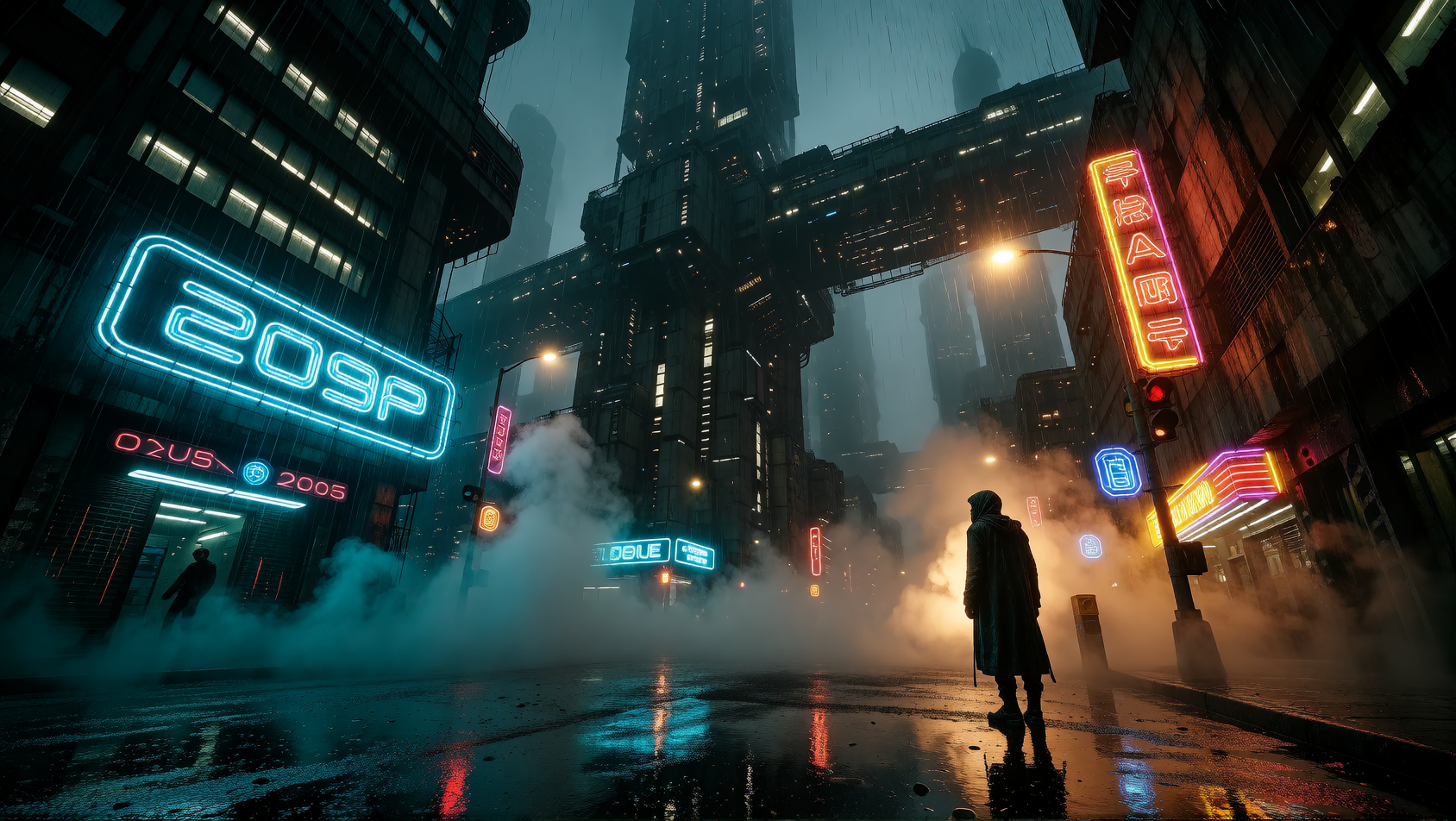
"Rain-soaked city street at night in the year 2099, towering brutalist megastructures fading into haze, cyan and amber neon signs reflected on wet asphalt, a lone figure in a long coat, volumetric fog, anamorphic lens flare, 35mm film, moody low key lighting" · Nirvana
Nirvana goes big and loud: steam, signs everywhere, drama. The same prompt on Zebra comes out quieter and more grounded. It looks like a real street at 3am, and its teal-and-sodium palette feels closer to film:
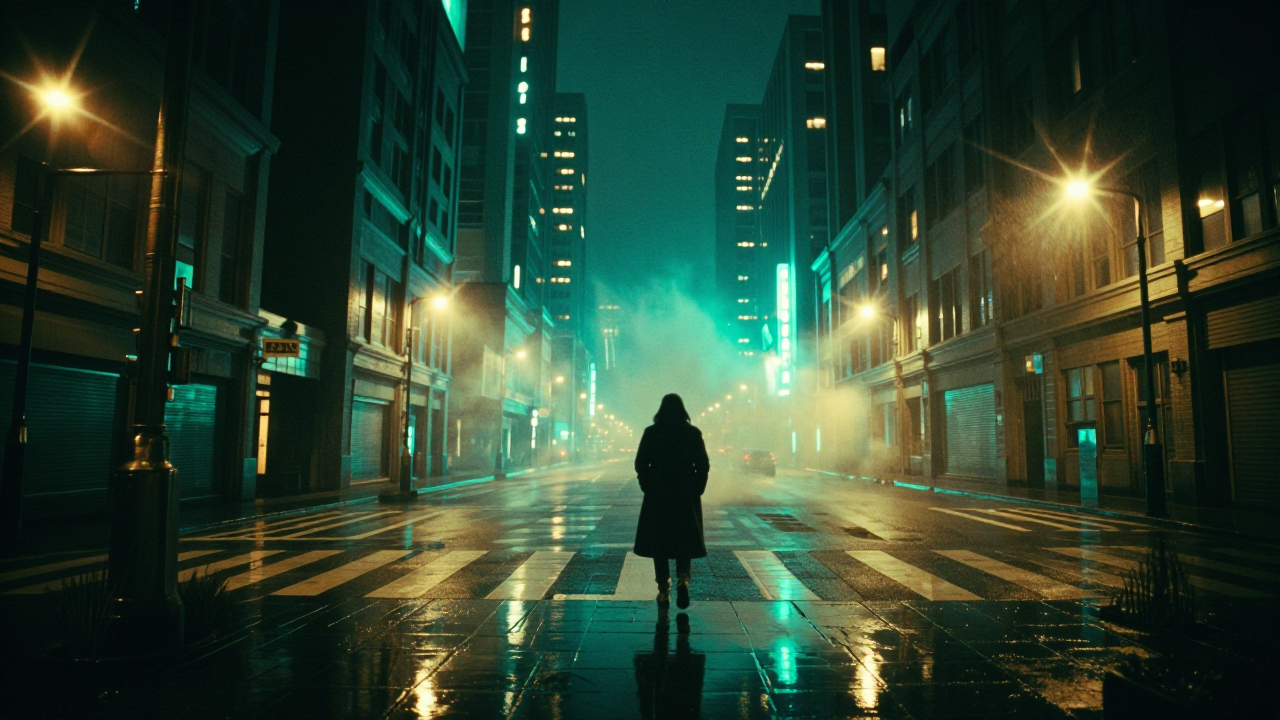
Same prompt as above · Zebra
The words doing the work:
- "Rain-soaked … reflected on wet asphalt": the reflections double your neon for free.
- "Volumetric fog" / "fading into haze": haze is what makes the buildings feel enormous.
- "Two colours, named": cyan and amber. Pick two and stick to them. A full rainbow of neon looks like a casino, not a city.
- "A lone figure": one small person makes everything else feel huge.
- "Anamorphic lens flare, 35mm film": the camera itself, which gives you the stretched flares and grain.
Watch the signs. Neon signs are where gibberish shows up. Nirvana gave us a sign reading "209P". If that bothers you, Zebra kept its signs small and out of focus.
The close-up
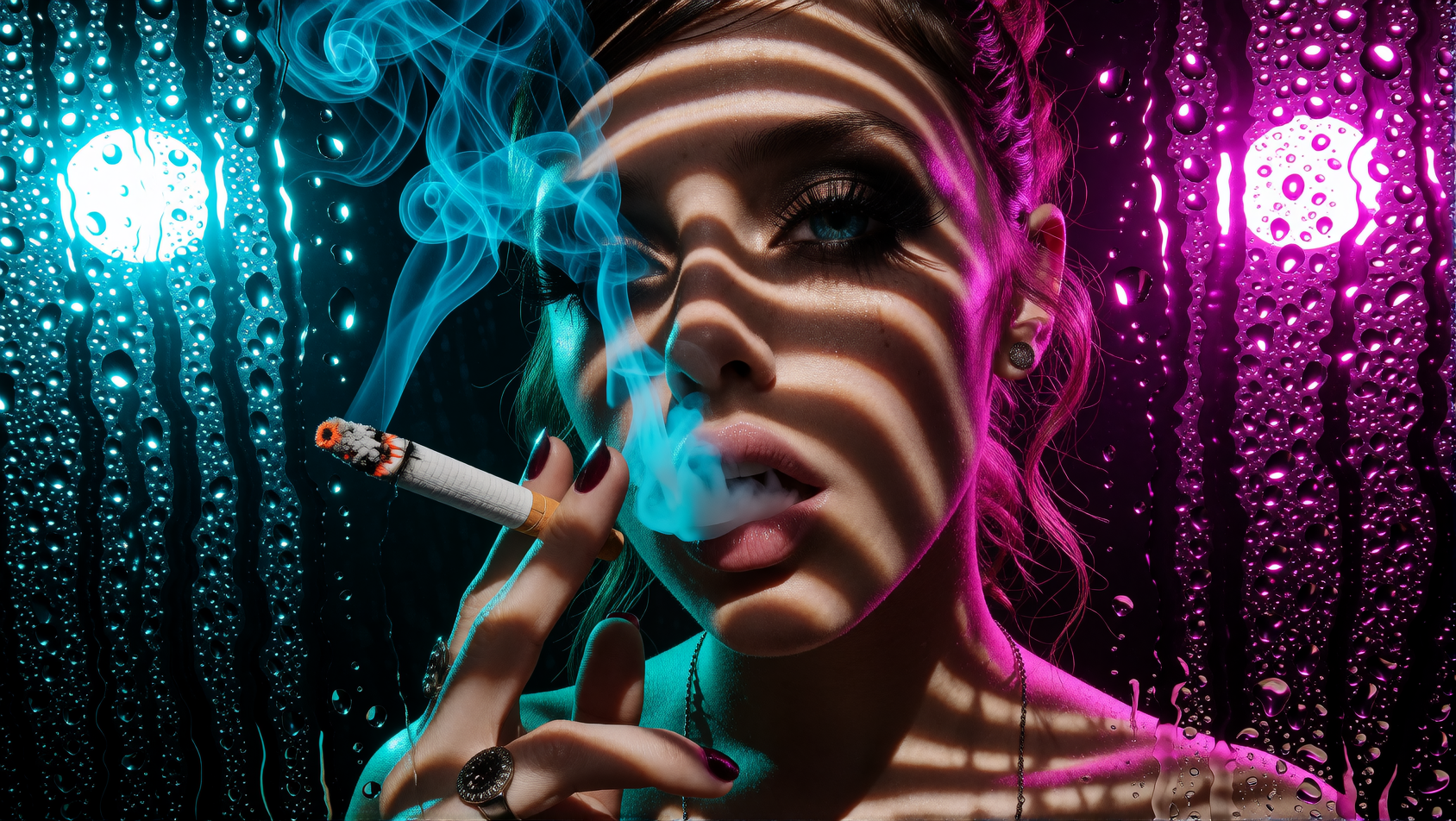
"Close-up portrait of a woman behind a rain-streaked window at night, neon cyan and magenta bokeh, light through venetian blinds striping her face, cigarette smoke curling, deep shadows, cinematic, 35mm film grain" · Nirvana
Venetian-blind shadows are a film-noir trick, and Blade Runner borrowed them on purpose. Add rain on glass and two neon colours in the background, and you're there.
3. Orange haze
The other half of the look: the dead city drowned in orange dust, with no neon at all. The secret is one colour only.
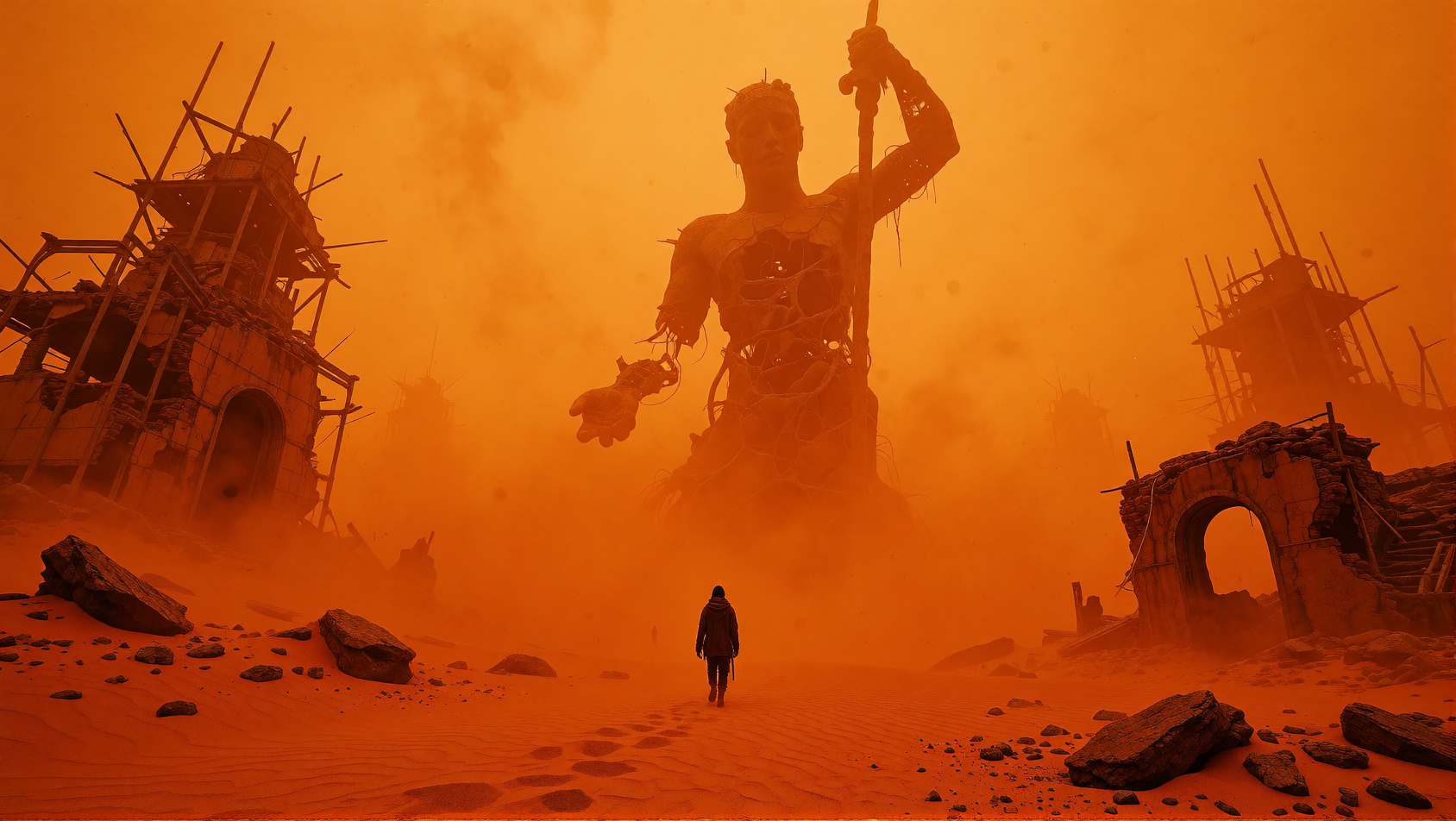
"Ruined desert city drowned in thick orange dust haze, monochrome sodium-vapor orange, a giant broken statue silhouette, a tiny lone figure walking toward it, soft diffused light, vast scale, quiet, cinematic wide shot, film grain" · Nirvana
- "Monochrome sodium-vapor orange": saying monochrome stops the model adding blue skies or green.
- "Thick dust haze" + "soft diffused light": no hard shadows, so everything glows.
- "A giant … a tiny lone figure": scale again. Something huge, someone small.
The recipe, in one line
Every prompt above follows the same pattern. Copy it and swap in your own pieces:
[what it is] + [how the light moves] + [two or three colours, in order] + [the camera or texture] + [where the empty space goes] + no text
For example:
a lone train platform at night, light smeared into long horizontal streaks, cyan fading into orange, slit-scan, film grain, black sky across the top half, no text
Quick tips
- Describe the light, not the movie. None of our prompts name a film. Words like smeared, haze, reflected and slit-scan do the work.
- Use 16:9. Pick it in the studio. Wide frames feel like cinema, and the streaks have room to travel.
- Choose your colours and stop. Two or three, in order. More than that turns to mud.
- Black is part of the picture. Ask for it ("pure black on the left third") and you'll have room for a title, a quote or a name.
- Try the same prompt on two models. Nirvana for glow and drama, Polarize for sharp liquid streaks, Zebra for something quieter and more real.
Open the studio, paste the light-smear prompt, and make it yours: change the colours, move the black, put a face in it. Post what you make, prompt included, so the next person asking can learn from you.